
NOW AVAILABLE · For Canadians who own, or want to own, a cottage in Ontario
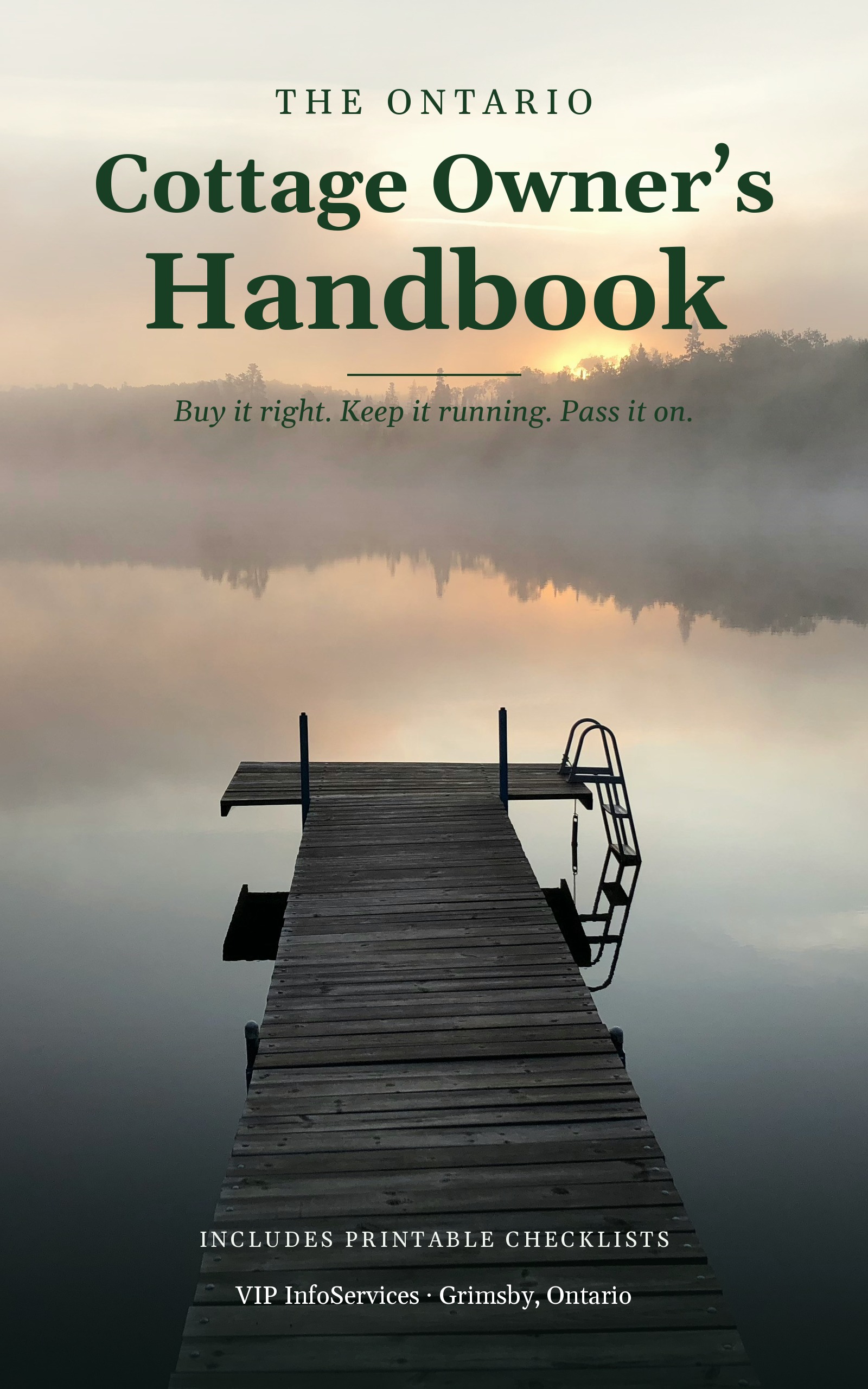
The Ontario Cottage Owner’s Handbook
Buy it right. Keep it running. Pass it on.
One complete, practical guide to buying, owning, maintaining and eventually passing on a cottage in Ontario. Written for Ontario’s rules, Ontario’s lakes and Ontario’s seasons: septic systems and wells, shore road allowances and road access, docks and shoreline permits, insurance, contractors, rentals, taxes and the family cottage.
140-page PDF with printable checklists and free updates for a year. Launch price CAD$21 (regular CAD$29) until November 15, 2026.
How to Close Your Ontario Cottage for the Winter
Wondering how to winterize a cottage or looking for a cottage closing checklist? Before you lock up for the season, work through these essentials. The exact steps depend on whether your cottage is heated year-round, your water system and your insurer’s requirements.
Cottage closing checklist
- Water and plumbing: Shut off and drain seasonal water lines, pumps, tanks and fixtures as appropriate; follow the manufacturer’s winterizing instructions.
- Heating and electricity: Set heat and power safely for your winter occupancy plan and insurance conditions.
- Roof, gutters and exterior: Clear debris, inspect drainage and secure anything vulnerable to wind or snow.
- Doors and windows: Lock up, check seals and make sure openings are weather-tight.
- Pests and food: Remove perishables, store supplies securely and address likely entry points.
- Dock, boats and outdoor items: Prepare or store equipment according to local conditions.
- Final walk-through: Check alarms, security, access arrangements and emergency contact information before leaving.
For a fuller explanation, read our guide to closing a cottage. For a broader ownership reference, The Ontario Cottage Owner’s Handbook includes printable spring opening and fall closing checklists, plus guidance on water, septic systems, maintenance and insurance.
Cottage ownership in Ontario comes with its own rules
A cottage is not a house in the city with a lake view. It has its own water system, its own sewage system, often a private road, a shoreline regulated by several governments at once, and a calendar of opening and closing that decides whether pipes burst over the winter. Most of the expensive surprises cottage owners face, from a failed septic bed to a boathouse sitting on land they don’t own, are predictable, and most can be avoided with the right questions asked at the right time.
The Ontario Cottage Owner’s Handbook gathers those questions and answers in one place. It explains how things actually work in Ontario’s cottage country: who inspects a septic system, how to test well water for free, what a WETT inspection is and why your insurer wants one, how the shore road allowance can leave you without legal ownership of your own shoreline, which permits a dock or boathouse may need, and how capital gains tax can force the sale of a family cottage if nobody plans for it.
It is written in plain language for real cottage owners and buyers, not lawyers or bureaucrats, with checklists you can print and use.
Wherever you are in cottage life
Thinking of buying a cottage
Choosing a region and a lake, seasonal versus year-round, road versus water access, and what a cottage really costs to own each year, including the big repairs nobody budgets for.
Buying right now
How to choose a cottage real estate agent, what a proper cottage inspection covers, the legal traps in cottage purchases, which offer conditions protect you, and how to spot misleading listings.
Already a cottage owner
Opening and closing the cottage, wells and water treatment, septic care, heat and power, docks and shorelines, insurance, safety, hiring contractors, renting out, taxes and passing the cottage on.
What’s inside: five parts, 27 chapters and a printable toolkit
The handbook follows the life of a cottage, from the first daydream to handing over the keys. Read it front to back or go straight to the chapter you need.
Part 1: Before You Buy
- Is a cottage right for you? Honest questions about time, distance, work and money
- Choosing a region and a lake: Muskoka, Haliburton, the Kawarthas, Georgian Bay and more
- Seasonal or year-round, road access or water access
- What a cottage really costs, with an example yearly budget
Part 2: Buying the Right Cottage
- Working with a cottage real estate agent, and how to tell a good one
- The cottage inspection: building, septic system, well water, wood stove (WETT) and shoreline structures
- Legal traps: shore road allowances, private and unassumed roads, zoning, unpermitted docks and boathouses
- Making the offer: conditions, chattels, land transfer tax, closing costs and cottage financing
- Listing scams and too-good-to-be-true deals
Part 3: Running the Cottage
- The cottage year: opening in spring, summer care, closing in fall, winter checks
- Water: drilled and dug wells, lake intakes, UV treatment and free bacteria testing
- Septic systems: how they work, pumping, re-inspection programs and warning signs
- Heat, power and internet: wood stoves, propane, generators, solar and satellite internet
- Docks, shorelines and permits: who regulates what, including Parks Canada waterways
- Pests, wildlife and the lake: mice, bats, bears, ticks, blue-green algae and invasive species
- Cottage insurance: vacancy clauses, docks, boats, rentals and liability
- Safety and security: smoke and carbon monoxide alarms, fire, boating, ice and break-ins
Part 4: Hiring Help Without Getting Burned
- Why cottage jobs go wrong, and how to plan around it
- Finding and vetting contractors: licences, insurance, WSIB and references
- Quotes, contracts and payments, including your rights under Ontario’s Consumer Protection Act and the 10% holdback
- Managing work when you’re not there, and working with caretakers
- When it goes wrong: complaints, small claims and liens
- Scams aimed at cottage owners: fake rental listings, title fraud, door-to-door sales and impersonation calls
Part 5: Money, Family and Moving On
- Renting out the cottage: township rules, insurance, HST and income tax
- Taxes: property tax, capital gains and the principal residence exemption
- The family cottage: siblings, cottage agreements, succession and estate planning
- Selling a cottage: timing, the cottage file, disclosure and pricing
The toolkit: checklists you’ll actually use
- Buyer’s due diligence checklist
- Spring opening and fall closing checklists
- Contractor vetting and contract checklist
- Quote comparison sheet
- Yearly cottage cost worksheet and annual maintenance calendar
- Cottage manual template and emergency information sheet
- Key organizations to call, and a glossary of cottage terms
Ten things to check before buying a cottage in Ontario
A preview of the kind of practical advice in the handbook. Every one of these has cost a cottage buyer real money.
- Do you own the shoreline? Many Ontario waterfront lots don’t run to the water. A 66-foot shore road allowance may belong to the township, sometimes with the cottage or boathouse sitting on it. Get a current survey.
- Is there legal road access? Private and unassumed roads are common. Find out who owns the land the road crosses, who maintains it and whether it’s plowed in winter.
- What condition is the septic system in? Ask the township for permits and inspection records, and have the tank pumped and inspected during your condition period.
- Is the water safe, and is there enough of it? Ontario offers free bacteria testing for private wells. Test more than once, and pay a lab for chemistry.
- Will an insurer cover it? Wood stoves usually need a WETT inspection. Old wiring, oil tanks and remote locations can limit coverage. Get a quote before you waive conditions.
- Are the dock and boathouse permitted? Shoreline structures can involve the township, the conservation authority, the province and, on the Trent-Severn or Rideau, Parks Canada.
- What can you build? Zoning, waterfront setbacks and septic capacity decide whether you can add a bunkie, winterize or expand.
- Can you rent it out? Many cottage townships now license or restrict short-term rentals, and unlicensed rentals can lose their tax deductions.
- Can you finance it? Seasonal and water-access cottages often need larger down payments. Get pre-approved for this type of property.
- What will it really cost each year? Budget for property tax, insurance, utilities, maintenance and a reserve for the big repairs.
Made for Ontario, not a generic guide to vacation homes
Ontario rules. Ontario Building Code septic requirements, conservation authority permits, land transfer tax, the Consumer Protection Act and Construction Act, Ontario’s Fire Code alarm rules and more.
Canadian taxes. Capital gains on a cottage, the principal residence exemption for families with a home and a cottage, deemed disposition at death, short-term rental income and HST.
Cottage country reality. Private roads, island and water-access cottages, freeze-up and break-up, lake associations, few contractors and short seasons.
Covering Ontario’s cottage regions, including Muskoka, Haliburton Highlands, Kawartha Lakes, Georgian Bay, Parry Sound, Lake Simcoe and Orillia, the Bruce Peninsula and Grey County, Prince Edward County, Frontenac and Land O’Lakes, the Rideau Lakes, the Ottawa Valley, the Almaguin Highlands, Lake Nipissing and Temagami, and Lake of the Woods.
Keeping the cottage in the family without tearing the family apart
For many Ontario families, the cottage is the most emotional thing they own, and too often the thing they end up fighting over. The handbook walks families through the conversation to have first, the options for passing on a cottage, how to plan for the capital gains tax, and what a written cottage co-ownership agreement should cover, from sharing summer weeks to buying out a sibling.
Frequently asked questions
Where can I get the handbook?
The Ontario Cottage Owner’s Handbook is available now as an instant download. Get your copy here.
What format is it?
A 140-page PDF with a clickable table of contents, designed for reading on any device, with printable checklists and worksheets. Prices are in CA dollars.
Is it only for Ontario?
Yes. It is written for Canadians who own or are buying a cottage in Ontario, and it covers Ontario’s rules, agencies and regions in detail. Federal rules such as boating and income tax are included where they apply.
Is this legal or financial advice?
No. The handbook explains how things work and what to ask, so you can work effectively with your real estate lawyer, accountant, insurance broker and licensed trades. Rules change, and every rule and figure in the book is dated so you know when it was checked.
Will it be kept up to date?
Yes. Rules, rates and programs change, and buyers receive free updates for one year.
I already own a cottage. Is it still useful?
Most of the handbook is for owners: opening and closing, water and septic, docks and permits, insurance, safety, hiring contractors, scams aimed at cottage owners, renting, taxes, the family cottage and selling.
Get your copy of the handbook
27 chapters, a printable toolkit and free updates for a year. Launch price CAD$21 (regular CAD$29) until November 15, 2026.
Published by VIP InfoServices, Grimsby, Ontario. CottagesInOntario.ca is an independent resource for Ontario cottage owners and buyers. Information in the handbook is general and educational; always confirm details with the relevant agency or a qualified professional before acting.